The second of Ginastera's Argentinian Dances is the Dance of the Graceful Maiden. And I LOVE this piece... the close chromaticism in the melody... the wide open intervals in the harmony.
There isn't a lot of rhythmic action, but a classic accent figure from Spanish music appears a couple of times. The 6/8 bars are mostly accented 1-2-3-1-2-3 but Ginastera occasionally throws in a bar accented 1-2-1-2-1-2. The most obvious examples are at 1:29 and 2:01. You can hear the effect by reciting this little poem:
Muffin with Marmelade
Muffin with Marmelade
Muffin with Marmelade
Muffin Muffin Muffin
This figure also appears all over the place in Albéniz' El Puerto and in the other two Argentinian Dances.
Track 5: Danza de la Moza Donosa (Alberto Ginastera)
Wednesday, January 30, 2008

Saturday, January 19, 2008
Piano 101: 4. Danza del Viejo Boyero
Or Dance of the Old Cowherd, although I can't imagine anybody dancing to this piece, much less an old cowherd.
Viejo Boyero is the first of three pieces that make up Alberto Ginastera's Danzas Argentinas. These three were among the last pieces I studied with Douglas Voice.
Listen for the six long notes at the end: they're the notes of the six open strings of a guitar.
Track 4: Danza del Viejo Boyero (Alberto Ginastera)
Viejo Boyero is the first of three pieces that make up Alberto Ginastera's Danzas Argentinas. These three were among the last pieces I studied with Douglas Voice.
Listen for the six long notes at the end: they're the notes of the six open strings of a guitar.
Track 4: Danza del Viejo Boyero (Alberto Ginastera)
Sunday, January 6, 2008
Piano 101: 3. Villanesca
Villanesca was probably my first exposure to the Spanish piano repertoire. My score has pencil markings from both Edith Orton and Jean-Paul Sevilla, suggesting that I worked on this piece toward the very end of my time with Mrs. Orton. That's when she was sending me occasionally to study with Jean-Paul and Douglas. Probably around 1984.
There's something so compelling about the mood of this piece to me. I always come back to it, and it always affects me. I think it's probably a combination of the stately, foreign sounds and my history with the piece.
I never studied much of the story of Enrique Granados. I know he was a Catalonian composer from around the turn of the century (19th to 20th). He's best known for his Goyescas suite, not the Spanish Dances suite from which Villanesca comes. I might get around to recording one of the Goyescas pieces eventually. We'll see.
Track 3: Villanesca (Enrique Granados)
There's something so compelling about the mood of this piece to me. I always come back to it, and it always affects me. I think it's probably a combination of the stately, foreign sounds and my history with the piece.
I never studied much of the story of Enrique Granados. I know he was a Catalonian composer from around the turn of the century (19th to 20th). He's best known for his Goyescas suite, not the Spanish Dances suite from which Villanesca comes. I might get around to recording one of the Goyescas pieces eventually. We'll see.
Track 3: Villanesca (Enrique Granados)
Tuesday, January 1, 2008
Piano 101: 2. Étude Opus 10 Nr. 3
If I had to guess, I'd say the piece I performed the most over the years was this Chopin Étude. Its nickname is "Tristesse", but I don't really find it sad. Maybe it's a little wistful.
The Chopin Études were intended to present technical exercises to students in the natural setting of enjoyable music. Chopin accomplished this blend so successfully that the Études have become part of the solo piano concert repertoire. The exercise in this piece is right-hand self-accompaniment. The right hand is playing two parts simultaneously: the obvious melody and a chordal accompaniment. The goal is to make the melody sing, standing out from the accompaniment, even though they're being played with one hand.
Track 2: Étude Opus 10 Nr. 3 (Frédéric Chopin)
The Chopin Études were intended to present technical exercises to students in the natural setting of enjoyable music. Chopin accomplished this blend so successfully that the Études have become part of the solo piano concert repertoire. The exercise in this piece is right-hand self-accompaniment. The right hand is playing two parts simultaneously: the obvious melody and a chordal accompaniment. The goal is to make the melody sing, standing out from the accompaniment, even though they're being played with one hand.
Track 2: Étude Opus 10 Nr. 3 (Frédéric Chopin)
Friday, December 28, 2007
Piano 101: 1. El Puerto
Ok. I had another goal in getting back to the piano. I wanted to build my playing back up well enough to record my old repertoire for my parents. They had to listen to me practice this stuff every day. At the time they were probably sick of hearing it. But it's been almost 20 years, and I thought it would be nice for them to have a record of me playing again. The full project will take me a while, so the recordings will probably come slowly. But the first rough track is here.
I chose to do El Puerto, from Isaac Albéniz' Iberia Suite first. It was one of my favorite pieces to perform, and probably my favorite piece of piano music, period. It could use some polish, but here it is.
Track 1: El Puerto (Isaac Albéniz)
I chose to do El Puerto, from Isaac Albéniz' Iberia Suite first. It was one of my favorite pieces to perform, and probably my favorite piece of piano music, period. It could use some polish, but here it is.
Track 1: El Puerto (Isaac Albéniz)
Monday, December 24, 2007
Piano 101: I Wish I Knew How To Quit You
I was back at the Steinway Gallery again on Saturday.
Steinway Guy emailed me to tell me he just received two new Bostons that I should check out: a 193 (6'4") and a 215 (7'). So I went in Saturday to have a look. That makes it three weeks in a row I've been in there.
The new Bostons were great. The tone on the 215 was gorgeous, and it played a lot like a Steinway B. But its action was a touch mushier than the 193. So Steinway Guy says he's going to have his tech look at the 215 to see if he can firm up the action, make it as crisp as the 193. To be honest, I'd rather his tech see if he could voice the 193 to make it as warm as the 215. (Ya, like they're going to voice a piano to the tastes of some guy who can't afford to buy it). I'm really impressed with the Bostons, though. They sound and play great at half the price of the core Steinways. Of course, even half the price is a darn expensive piano -- well above the range of the Japanese pianos.
I also played the Pramberger 228 (7'6") again. It's a nice piano, great tone. A little loose. There's a buyer in San Antonio who wants it. Steinway Guy held on to it because he knew I was coming in Saturday and I had mentioned that I liked it. I had to laugh. I told him to go ahead and send it to San Antonio.
But the star of the show remains this one Steinway A. I've probably played four or five As (6'2") and four or five Bs (6'11") at SPG. But this one A is "The One". Number 578688 (or "688", as I like to call it) may be the nicest piano under 9' that I've ever played. It does everything I ask it to do, without complaint or hesitation. It's like it wants to make me play better. And the tone is like buttah.
Ok. This is getting a little weird.
Anyway. Steinway Guy is going to email when his tech has had a go at the Boston 215. Probably later this week. That'll make it four weeks in a row. Johanne is definitely starting to get suspicious.
Steinway Guy emailed me to tell me he just received two new Bostons that I should check out: a 193 (6'4") and a 215 (7'). So I went in Saturday to have a look. That makes it three weeks in a row I've been in there.
The new Bostons were great. The tone on the 215 was gorgeous, and it played a lot like a Steinway B. But its action was a touch mushier than the 193. So Steinway Guy says he's going to have his tech look at the 215 to see if he can firm up the action, make it as crisp as the 193. To be honest, I'd rather his tech see if he could voice the 193 to make it as warm as the 215. (Ya, like they're going to voice a piano to the tastes of some guy who can't afford to buy it). I'm really impressed with the Bostons, though. They sound and play great at half the price of the core Steinways. Of course, even half the price is a darn expensive piano -- well above the range of the Japanese pianos.
I also played the Pramberger 228 (7'6") again. It's a nice piano, great tone. A little loose. There's a buyer in San Antonio who wants it. Steinway Guy held on to it because he knew I was coming in Saturday and I had mentioned that I liked it. I had to laugh. I told him to go ahead and send it to San Antonio.
But the star of the show remains this one Steinway A. I've probably played four or five As (6'2") and four or five Bs (6'11") at SPG. But this one A is "The One". Number 578688 (or "688", as I like to call it) may be the nicest piano under 9' that I've ever played. It does everything I ask it to do, without complaint or hesitation. It's like it wants to make me play better. And the tone is like buttah.
Ok. This is getting a little weird.
Anyway. Steinway Guy is going to email when his tech has had a go at the Boston 215. Probably later this week. That'll make it four weeks in a row. Johanne is definitely starting to get suspicious.
Saturday, December 22, 2007
Piano 101: Coming Out (Again)
When I started practicing again I had no idea how much pure joy I would get out of just playing. I'm excited every time I step out to practice at the University or a friend's house, or even when I play bits and pieces on pianos at the store. And when I'm done my head is so full of music that walking and talking and chewing and breathing all feel locked to some rhythm. (I probably look like a dork).
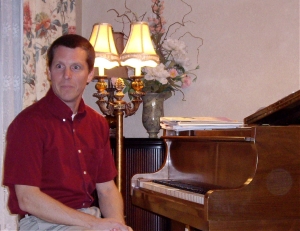 But my goal of all this was to be able to play piano again in public on demand. And my target was Christmas. Well, today is December 22... and yesterday I played in a little Christmas recital at the home of a friend who teaches. I think that counts for "in public", even if the public was pretty small.
I performed two pieces: a Chopin Étude (Opus 10, Number 3) and a piece from Isaac Albéniz' Iberia Suite (El Puerto). They're kind of challenging to play, but I think it went pretty well. I hope to record these two over the next couple of weeks and post the recordings on this blog.
Afterwards, the host of the recital suggested I might be able to perform at one of the upcoming recitals at a music school she's involved with here in Austin. If it works out, I might be able to find leads to other recitals, too.
Hm... better get back to practicing!
 But my goal of all this was to be able to play piano again in public on demand. And my target was Christmas. Well, today is December 22... and yesterday I played in a little Christmas recital at the home of a friend who teaches. I think that counts for "in public", even if the public was pretty small.
I performed two pieces: a Chopin Étude (Opus 10, Number 3) and a piece from Isaac Albéniz' Iberia Suite (El Puerto). They're kind of challenging to play, but I think it went pretty well. I hope to record these two over the next couple of weeks and post the recordings on this blog.
Afterwards, the host of the recital suggested I might be able to perform at one of the upcoming recitals at a music school she's involved with here in Austin. If it works out, I might be able to find leads to other recitals, too.
Hm... better get back to practicing!
Monday, December 17, 2007
Piano 101: Ancient History
My mother is a piano teacher, so we've always had lots of piano music in the house. I remember sitting on the floor at her feet under the keybed of her old "Chopin" upright piano while she played. When I was old enough to reach the keys I started plunking out stuff myself. With my mother's help I began to make my way through the lesson books. This informal arrangement lasted for maybe five years, I'm guessing. I had stumbled my way to about a grade 5 level in the Royal Conservatory of Music (Toronto) grading system. We decided that if I wanted to "do it right", I needed a teacher. So at ten years old I began formal lessons with Edith Orton, a great Ottawa teacher.
Mrs. Orton guided me through the Royal Conservatory examinations until RCM grade 10. Along the way she encouraged me to perform in recitals and compete at the Ottawa Music Festival and the Canadian Music Competition. My repertoire was mostly from the RCM examniation syllabi, but also included, importantly, concerti for piano and orchestra. My orchestra was my mother, playing the orchestra parts arranged for second piano. As I advanced through the grades, Mrs. Orton also stressed the importance of occasional lessons with other teachers. I had the opportunity to meet with Jean-Paul Sevilla, Andrew Tunis and Douglas Voice, all three at the University of Ottawa at the time. But more than anyone else, Edith Orton taught me music, and I'm forever indebted to her for it.
After grade 10, Mrs. Orton decided I would benefit more by getting a new teacher. The obvious best fit was Douglas Voice at UofO. I think I must have been about 17 years old and probably starting grade 12 at High School. (High School in Ontario at the time went to grade 13). My two years of lessons with Douglas Voice prepared me for the ultimate Royal Conservatory exam: the Associateship Diploma in Piano Performance. Creative planning of my High School course schedule over the years allowed me to finish grade 13 spending only a half day at school. The other half I could spend practicing.
My lessons with Douglas were completely different from previous lessons. We would often spend our time discussing issues of interpretation or experimenting with different sounds and techniques to decide what might work for a given piece. I took the Associateship exam in the Spring of 1986, the same time I graduated from High School. I thank Douglas for bringing me to the "next level" of performance, and for introducing me to an incredible new world in the piano repertoire -- in particular the Spanish piano works of Granados, Albeniz and Ginastera.
After High School I had a bit of a premature mid-life crisis. I had always assumed I would find some kind of career in music. When I realized I didn't want to get a BMus, it became obvious that my options were pretty limited. I panicked. I got into computers. During the musical winter of my computer studies, I did manage to spend one semester at the piano, fulfilling a Humanities credit by doing a juried recital course in piano performance. It gave me the opportunity to study once more with Douglas Voice, one-on-one for the semester. We remained good friends, but that would be the last time we studied music together. Douglas succumbed to cancer in 1998. I wish I could play for him one more time.
Mrs. Orton guided me through the Royal Conservatory examinations until RCM grade 10. Along the way she encouraged me to perform in recitals and compete at the Ottawa Music Festival and the Canadian Music Competition. My repertoire was mostly from the RCM examniation syllabi, but also included, importantly, concerti for piano and orchestra. My orchestra was my mother, playing the orchestra parts arranged for second piano. As I advanced through the grades, Mrs. Orton also stressed the importance of occasional lessons with other teachers. I had the opportunity to meet with Jean-Paul Sevilla, Andrew Tunis and Douglas Voice, all three at the University of Ottawa at the time. But more than anyone else, Edith Orton taught me music, and I'm forever indebted to her for it.
After grade 10, Mrs. Orton decided I would benefit more by getting a new teacher. The obvious best fit was Douglas Voice at UofO. I think I must have been about 17 years old and probably starting grade 12 at High School. (High School in Ontario at the time went to grade 13). My two years of lessons with Douglas Voice prepared me for the ultimate Royal Conservatory exam: the Associateship Diploma in Piano Performance. Creative planning of my High School course schedule over the years allowed me to finish grade 13 spending only a half day at school. The other half I could spend practicing.
My lessons with Douglas were completely different from previous lessons. We would often spend our time discussing issues of interpretation or experimenting with different sounds and techniques to decide what might work for a given piece. I took the Associateship exam in the Spring of 1986, the same time I graduated from High School. I thank Douglas for bringing me to the "next level" of performance, and for introducing me to an incredible new world in the piano repertoire -- in particular the Spanish piano works of Granados, Albeniz and Ginastera.
After High School I had a bit of a premature mid-life crisis. I had always assumed I would find some kind of career in music. When I realized I didn't want to get a BMus, it became obvious that my options were pretty limited. I panicked. I got into computers. During the musical winter of my computer studies, I did manage to spend one semester at the piano, fulfilling a Humanities credit by doing a juried recital course in piano performance. It gave me the opportunity to study once more with Douglas Voice, one-on-one for the semester. We remained good friends, but that would be the last time we studied music together. Douglas succumbed to cancer in 1998. I wish I could play for him one more time.
Sunday, December 16, 2007
Thom's Journal -- Say Goodnight
Temptation is a harsh master who carries a double-edged sword. He came to me hard in the fall of 1995. I was traveling a lot to Texas and California. My then-partner was traveling a lot to Asia and Africa. I was lonely, but it wasn't just the physical separation, we were also growing apart emotionally. Just to make things more complicated, I started falling for another woman. The longing was both titillating and tortuous. The opportunity first presented itself in San Francisco, but I managed to avert temptation and say goodnight. I sat in my hotel room in Santa Clara for a while strumming my guitar. The plodding progression that would become the foundation for the song perfectly reflected my dark mood. I really did cry myself to sleep conflicted by longing, guilt, obsession, love, frustration and confusion. The next morning I was overcome by emotional numbness and wrote the chorus.
When we did Say Goodnight as a band, the crunchy distortion of the electric guitar gave the song an even more tortuous feel, which I like. I almost still like it better just me and acoustic guitar, though, because it's so much sadder that way.
When we did Say Goodnight as a band, the crunchy distortion of the electric guitar gave the song an even more tortuous feel, which I like. I almost still like it better just me and acoustic guitar, though, because it's so much sadder that way.
Thom's Journal -- Not A Setting Sun
Louis Fagan was one of the best friends I ever had and an extremely talented poet, lyricist and musician. When he died of a heroin overdose in 1997 after having ostensibly kicked the addiction, I was angry. What a waste. Adding to my emotional anguish was the fact I was in New York City at the time and incommunicado. Although several people tried desperately to get hold of me, by the time I got back, the funeral was over and for a long time I felt like I had no closure, especially since nobody ever shared the results of the autopsy with me.
Writing Not a Setting Sun was an exercise in catharsis. I had to get my anger and sadness out. I still intend to write a song celebrating Louis' short life and the wonderful music he created.
Writing Not a Setting Sun was an exercise in catharsis. I had to get my anger and sadness out. I still intend to write a song celebrating Louis' short life and the wonderful music he created.
Subscribe to:
Posts (Atom)


 Posts
Posts

